Award-winning Houston personal injury attorney
HUNDREDS OF MILLIONS WON!

 713-225-5050

Award-winning Houston personal injury attorney
HUNDREDS OF MILLIONS WON!
$25,500,000
industrial accident Burn Case
$25,500,000
industrial accident Burn Case















For over thirty five years, our Houston personal injury attorney, Charles Argento, has been protecting the rights of our clients with an aggressive and supportive approach to creating solutions and systematically producing results.
For the first decade of Mr. Charles Argento’s career, he worked on the other side of the courtroom, honing his legal craft by maximizing his time representing large insurers and defendants who were being sued. With the intricate details and insider knowledge on regarding personal injury on our side, our attorney creates significant and unique financial recovery opportunities for our clients. We can do the same for you.
Our personal injury law firm in Houston, Texas understands how devastating an accident can be, no matter where it occurs.
Unfortunately, there are very few places where we are safe from negligence, and when you are hurt as a result, our Houston personal injury lawyer wants to help you hold the person or party who caused your personal injuries accountable for their actions or inaction’s.
Have you or your family been burdened by an accident, PERSONAL INJURY OR WRONGFUL DEATH? If so, let me help. I will fight hard for you, and try to get the maximum cash and benefits you deserve.
call now713-225-5050
cases we handle
Practice Areas
Have you or your family been injured by a Car or Truck Accident, Personal Injury, or Wrongful Death? If so, it’s critical that you hire an attorney who you can trust to provide the best possible outcome for you and your family.

Award-winning houston personal injury attorney
attorney
Throughout his career, Argento has continually received recognition for his excellence by his clients, colleagues and the press. He holds three of the most prestigious peer review ratings: Super Lawyer, an honor bestowed on only 5% of the State’s attorneys; AV-rated by the Martindale-Hubbell Law Directory—the highest rating worldwide for legal ability and ethical standard, awarded to less than 5 percent of attorneys in the U.S.—for the past 22 consecutive years; and 10/10 by Avvo, reflecting his superb professional conduct and experience in the legal community, and providing an unmatched level of transparency, information and guidance.
In addition to these honors, Argento was distinguished as one of the Top 100 Trial Lawyers by The National Trial Lawyers; the National Trial Lawyers Top 25 for Motor Vehicle Accidents, Brain Injury, Products liability, Mass tort and Top 10 in Mesothelioma; the honor of Lawyers of Distinction; the 10 Best in client satisfaction by the American Institute of Personal Injury Attorneys; the Top 3 Personal Injury Lawyers in Houston by Three Best Rated; and Houstonia Top Lawyers in Houston. Argento, is also Google Screened. He also holds a Distinguished Justice Advocates certificate, awarded to only the top 1 percent of attorneys in America.
From his present status as award-winning Houston personal injury lawyer, Charles J. Argento can look back at a long line of hard work and excellence, always delivering the highest levels of professionalism. And Charles’s career hasn’t been only about winning awards. Awards have been a welcome acknowledgment, but the real focus of Charles’s practice has been winning cases.
In 37+ years of leading a wildly successful legal law firm practice, lawyer Charles J. Argento has built a solid reputation in the legal community and has become a highly respected Houston injury lawyer by his most frequent adversary, the insurance companies.
Why choose us
6 reasons people choose our law firm
Hundreds Of Millions Won.
100% Free Consultation. Free Unless We Win. Get The legal Representation You Deserve.
Award-winning Houston Personal Injury Attorney Who Wants To Help You Today.
No Matter How Tough The Fight. We Fight Hard For All Personal Injury Victims.
37+ Years Of Experience. Fighting For Those Injured In Houston, Texas Since 1988.
Fully Bilingual.
Contact Our Houston Personal Injury Attorney Charles J. Argento To Get The Legal Representation You Deserve
personal injury accident
Our personal injury lawyer knows that each injury is unique. Your financial recovery circumstances and needs are going to differ from any other injured party, and we can help outline the details of your case, so together we can pursue the best outcome.
When you are hurt in an accident in Houston, you may need to take time off work to heal. Unfortunately, not everyone gets paid during their time away from work, and that can lead to significant financial strain.
If you have been hurt in a personal injury accident, contact our Houston personal injury lawyer to seek the best financial outcome available for your case, which could include:
Charles J. Argento is an accomplished personal injury attorney in Houston, and we can help you design a complete case that leads to financial results.
Verdicts & Settlements
record of success
Argento, has won Millions of dollars in on behalf of his clients throughout his career.
industrial accident Burn Case
Settlement (Client: $15,000,000; Atty: $10,200,000; Exp: $300,000
Personal Injury CASe
Settlement (Client: $9,400,000; Atty: $6,600,000; Exp: $500,000
toxic chemical exposure
Settlement (Client: $6,900,000; Atty: $4,800,000; Exp: $300,000
18 wheeler truck accident
Settlement (Client: $5,900,000; Atty: $4,000,000; Exp: $100,000
auto accident CAse
Settlement (Client: $4,000,000; Atty: $2,800,000; Exp: $200,000
truck accident case
Settlement (Client: $3,500,000; Atty: $2,400,000; Exp: $100,000
Determining whether you have a valid personal injury claim involves more than just being injured in an accident. A successful claim in Texas must show that someone else’s negligence or intentional wrongdoing directly led to your injuries and losses. To establish this, you’ll typically need evidence proving the responsible party owed you a duty of care, breached that duty, and caused injuries resulting in measurable damages.
Whether you live in Houston—including its Midtown, Mid West, Greater Uptown, and Greater Third Ward neighborhoods—or surrounding areas like Cypress, Montrose, River Oaks, Montrose, River Oaks, or anywhere in Texas, and believe these elements apply to your situation, contact our skilled Houston personal injury attorney who can carefully assess your case specifics and guide you on the next steps.
Determining fault in a personal injury claim relies heavily on gathering and presenting clear evidence to demonstrate the other party’s responsibility for your injuries. Crucial evidence often includes police reports documenting the details and causes of the accident, eyewitness statements providing unbiased accounts of the event, medical records linking your injuries to the incident, and photographs or videos capturing the scene, damages, and hazardous conditions. Additionally, expert testimony—from accident reconstruction specialists, medical professionals, or engineers—can strengthen your case by clearly establishing how and why the accident occurred.
Immediately following an accident in Houston, your priority should be ensuring safety and getting medical help for yourself or anyone injured. Once everyone’s safety is assured, promptly call 911 so police can officially document the incident—crucial for proving your claim later.
It is essential to gather evidence immediately, including photographs or videos of the accident scene, vehicle damage, injuries, and surrounding areas. Obtain names and contact details from witnesses, and avoid discussing fault or admitting responsibility at the scene.
Finally, even if you don’t initially feel injured, promptly get a thorough medical evaluation to document injuries that may not be immediately obvious, and contact an experienced Houston personal injury attorney to guide you forward.
In Texas, personal injury victims can potentially recover multiple compensation forms to cover economic and non-economic losses.
Understanding which categories of damages apply and how to accurately quantify them is key to achieving a fair outcome in your Texas personal injury claim.
Navigating the aftermath of an injury can be daunting, especially when dealing with complex legal matters and aggressive insurance companies. Charles J. Argento brings decades of proven experience as a personal injury attorney in Houston, ensuring clients have a powerful advocate who fully understands Texas law and local court procedures.
By carefully investigating your case, gathering evidence, and working with medical and accident reconstruction experts, our Houston personal injury law firm develops a strategic approach tailored to securing maximum compensation. Whether negotiating assertively with insurance companies or presenting a compelling case in court, his top priority remains ensuring your voice is heard clearly and your rights protected throughout the entire legal process.
Whether you live in Houston—including its Midtown, Mid West, Greater Uptown, and Greater Third Ward neighborhoods—or surrounding areas like Cypress, Montrose, River Oaks, Montrose, River Oaks, or anywhere in Texas, and believe these elements apply to your situation, contact our skilled Houston personal injury attorney today to learn more about your legal rights and options to pursue a claim.
Most people never expect they’ll need to understand Texas personal injury laws—until an accident happens, and suddenly, knowing your rights becomes crucial. Unfortunately, by then, it’s often overwhelming to make sense of complex statutes and regulations on your own.
That’s why Houston personal injury attorney Charles J. Argento is here: to translate these critical legal principles into a clear, understandable language for you. We believe every client deserves clarity about their case and the confidence from knowing exactly how we’re fighting for their rights.
Here’s what you need to know about Texas personal injury laws to help you navigate your situation.
1. Statute of Limitations (Tex. Civ. Prac. & Rem. Code §16.003)
Personal injury claims must be filed within two years from the date of injury. Failure to file within this period generally bars the claim.
2. Modified Comparative Fault (Tex. Civ. Prac. & Rem. Code §33.001)
3. Damage Caps
4. Texas Auto Insurance Laws
5. Texas Premises Liability Law
6. Texas Workers’ Compensation Laws
7. Governmental Immunity and the Texas Tort Claims Act (Tex. Civ. Prac. & Rem. Code §101.001 et seq.)
8. Texas Dog Bite Liability (“One Bite Rule”)
Texas follows a “one-bite” rule, meaning owners are typically liable if the dog has previously bitten or demonstrated aggression. Once this is established, the owner may be held strictly liable.
9. Local Regulations in Texas Cities
The City of Houston—including its Midtown, Mid West, Greater Uptown, and Greater Third Ward neighborhoods—and surrounding areas like Cypress, Montrose, River Oaks, Montrose, River Oaks, and other larger cities like Austin, Dallas, and San Antonio have local ordinances related to property maintenance, sidewalk repairs, building safety codes, and construction safety that can be highly relevant to personal injury claims involving premises liability, construction accidents, and municipal liability.
10. Dram Shop Law (Tex. Alcoholic Beverage Code Ann. §2.02)
Bars, restaurants, and liquor establishments can be held responsible if they sell or serve alcohol to an intoxicated person who subsequently injures someone else.
If you have been the victim of an accident in Houston through no fault of your own, whether it is an automotive, workplace, or another type of accident, and if you expect just compensation, then you must have adequate representation.
The quality of Houston truck, motorcycle, or car accident law firm varies greatly, and when your well-being rests upon receiving compensation for an injury, you do not want to take chances. You want the best! Charles J. Argento is among the best attorneys in both Houston and all of Texas, and he has the credentials to prove it.
Contact our Houston personal injury lawyer, Charles J. Argento, today at (713) 766-4417 and let him help you too!
Real People, Real Stories
Client Testimonials

Attorney Argento represented my family for an automobile accident. The insurance company refused to pay for the damage to our car and for our injuries. Mr. Argento was very aggressive with the insurance company, but told us to be patient, because it would take time to make them do the
Jonathan Conejo
The worst enemy of human kind is the lack of information . Now with attorney Charles Argento you are not going to have this problem . Usually when people are into car accidents they don't know that law and their rights . I'm glad I met attorney Charles Argento who
Joseph Duron , a personal injury client
My wife and I were injured in a car accident in Houston, Texas. We had no medical insurance to get proper medical treatment for our injuries. Two other big law firms said we had no case. Lawyer, Charles Argento from Houston gave us personal service and helped us through this
Jim, a Car Accident client.
Unfortunately, Houston car accidents are not uncommon, and some can lead to significant injuries that can be life changing. Our personal injury law firm Charles J. Argento & Associates understands that your injuries, medical bills, time away from work, and mounting expenses can become overwhelming very quickly.
According to the National Highway Traffic Safety Administration, there were 3,772 traffic-related deaths in the State of Texas alone last year. And if your family member was lost to someone else’s negligence, our Houston personal injury attorney wants to help you hold them financially responsible for your loss.
The Texas Department of Transportation recorded even more startling statistics last year, including:
Last year in Texas, traffic accidents resulted in:
If you were injured in a crash, contact our auto accident lawyer, or even if you were hurt in a collision in a surrounding city, our accomplished Texas car injury lawyer can help you pursue justice by outlining your legal options and holding the negligent party financially responsible for your recovery.
According to the NHTSA, almost 30 people are killed every day in drunk driving accidents throughout the United States: One person every 48 minutes.
Last year alone, throughout the country, drunk driving represented:
If your family member was one of those who lost their lives to another’s negligence, our Houston personal injury lawyer would like to help you pursue the financial settlement that will allow you to take the time you need to heal.
If you have been injured in a crash with a drunk driver in Houston, Texas, our DUI lawyer at Charles J. Argento & Associates can provide you with the representation you need to pursue the medical recovery you deserve today.
As consumers, we purchase products that will enhance our lives, including new tires for our cars, furniture for our homes, and medical products for our health. When those products cause harm, instead of serving their original purpose, our community deserves retribution from the designer, manufacturer, or distributor, to name a few.
While there is no limit to the number or types of products that can cause personal injury, the United States Consumer Product Safety Commission maintains statistics on how people are getting hurt.
These defective products can include, but are not limited to:
If you have suffered a personal injury due to a defective product, you will need an experienced Houston defective products attorney of Charles J. Argento & Associates law firm to provide an aggressive and dedicated approach to delivering results.
The Houston Workers’ Compensation, and those that govern workers’ rights throughout the State of Texas are very different than the laws adopted by most other states.
Texas does not require employers to carry workers’ compensation coverage.
If you were hurt at work, and your employer does not provide workers’ compensation coverage, the company could be open to a personal injury lawsuit. Our committed and experienced personal injury lawyer in Houston, Texas knows that the damages – and the attorney fees – associated with work injuries are practically unlimited.
In addition, common defenses that may be available in most personal injury lawsuits are no longer applicable when an employer forgoes workers’ compensation insurance coverage.
If you have been hurt at work, whether your employer is a workers’ compensation coverage holder or not, it is important that you speak with our Houston workers’ compensation attorney today to ensure your rights are protected, and that you receive the medical care and time away from work you deserve.
Charles J. Argento is an experienced and dedicated personal injury attorney in Houston, Texas whose motivation comes from an unwavering concern for those who need legal help.
First, our compassionate Houston personal injury lawyer provides free consultations, so those who are hurt in an accident never have to worry about paying out of pocket just to discuss their case with an attorney.
Next, our injury law firm believes that no one should have to forego the medical care they deserve after suffering a personal injury from another’s negligence, which is why we provide our clients with the guidance they need to receive the best medical care available – even if they are uninsured.
Finally, Charles J. Argento & Associates works only on a contingency basis. If our personal injury law firm does not win your case, you pay nothing.
According to the NHTSA, almost 30 people are killed every day in drunk driving accidents throughout the United States: One person every 48 minutes.
Last year alone, throughout the country, drunk driving represented:
If your family member was one of those who lost their lives to another’s negligence, our personal injury lawyer would like to help you pursue the financial settlement that will allow you to take the time you need to heal.
If you have been injured in a crash with a drunk driver in Houston, Texas, our DUI lawyer at Charles J. Argento & Associates can provide you with the representation you need to pursue the medical recovery you deserve today.
As consumers, we purchase products that will enhance our lives, including new tires for our cars, furniture for our homes, and medical products for our health. When those products cause harm, instead of serving their original purpose, our community deserves retribution from the designer, manufacturer, or distributor, to name a few.
While there is no limit to the number or types of products that can cause personal injury, the United States Consumer Product Safety Commission maintains statistics on how people are getting hurt.
These defective products can include, but are not limited to:
If you have suffered a personal injury due to a defective product, you will need an experienced defective products attorney of Charles J. Argento & Associates law firm to provide an aggressive and dedicated approach to delivering results.
Premises liability cases can lead to severe personal injuries in Houston, Texas, causing the individual who was hurt to take unpaid time off work and engage in costly medical care that could lead to a financial nightmare.
Premises liability cases are not uncommon and can be the result of:
Premises liability and personal injury can occur anywhere in Houston, Texas, including on private, public, or government property. Our dedicated personal injury attorney at Charles J. Argento & Associates can help you determine exactly who is at fault while creating a concrete legal plan to pursue the negligent person or party responsible for your financial settlement.
When someone loses their life to negligence, carelessness, unskillfulness, or default in the State of Texas, our Houston personal injury lawyer can help their family pursue the full financial settlement they deserve for their tragic loss.
Drunk driving accidents, medical malpractice, and premises liability cases can all lead to more than personal injuries, but result in wrongful death after the accident has occurred.
The Texas Wrongful Death Legislation allows surviving spouses, children, or parents to pursue a claim against the person, party, or company whose wrongful act led to the death of their loved one.
If you have lost a loved one to negligence, our Houston wrongful death attorney can help you sort through the facts and discover exactly who was responsible for their untimely death and pursue them for financial recovery.
Houston is the most populous city in the State of Texas, and the fourth most populous city in the United States. With more than 2.3 million people calling Houston home, our economy and environmental make up provides a varied balance of both commerce and recreation.
Houston is recognized worldwide for its energy industry, particularly for oil and natural gas, as well as for biomedical research and aeronautics. When our residents are put at risk by negligent extrication practices or premises liability hazards, our Houston personal injury attorney can help provide the financial recovery relief they need to pursue the best medical care for their circumstances.
Of the ten most populous U.S. cities, Houston has the most total area of parks and green space.
The Houston Arboretum and Nature Center is part of our city’s 19,600 acres of green space, adding to the already impressive 56,405 acres of parks throughout the city, which include:
The size, population, and traffic congestion in our city can lead to serious collisions that require the experience of our Houston injury attorney who can settle your personal injury claim outside the courtroom, or with a positive jury verdict.
news & articles
Latest Blog Posts

Understanding Personal Injury Lawyer Fees: What Percentage Do Lawyers Take for a Personal Injury Case
When you're dealing with a personal injury claim, one of the biggest questions on your mind is probably about money. Specifically, how much of your potential settlement will actually end...
View Post
When Off-Road Fun Turns to Tragedy: ATV Crash Liability on Private Property in Texas
Summer in Texas brings more than just rising temperatures—family gatherings, backyard cookouts, weekend getaways, and long afternoons spent outdoors. For many, especially on private property, that also means using all-terrain...
View Post
When a Distracted Driver Causes a Child’s Bicycle Injury in a Texas Neighborhood
As summer arrives across Texas, more children are enjoying the freedom of being outdoors—riding bicycles through neighborhoods, playing in driveways, and crossing residential streets to visit friends or family. These...
View Post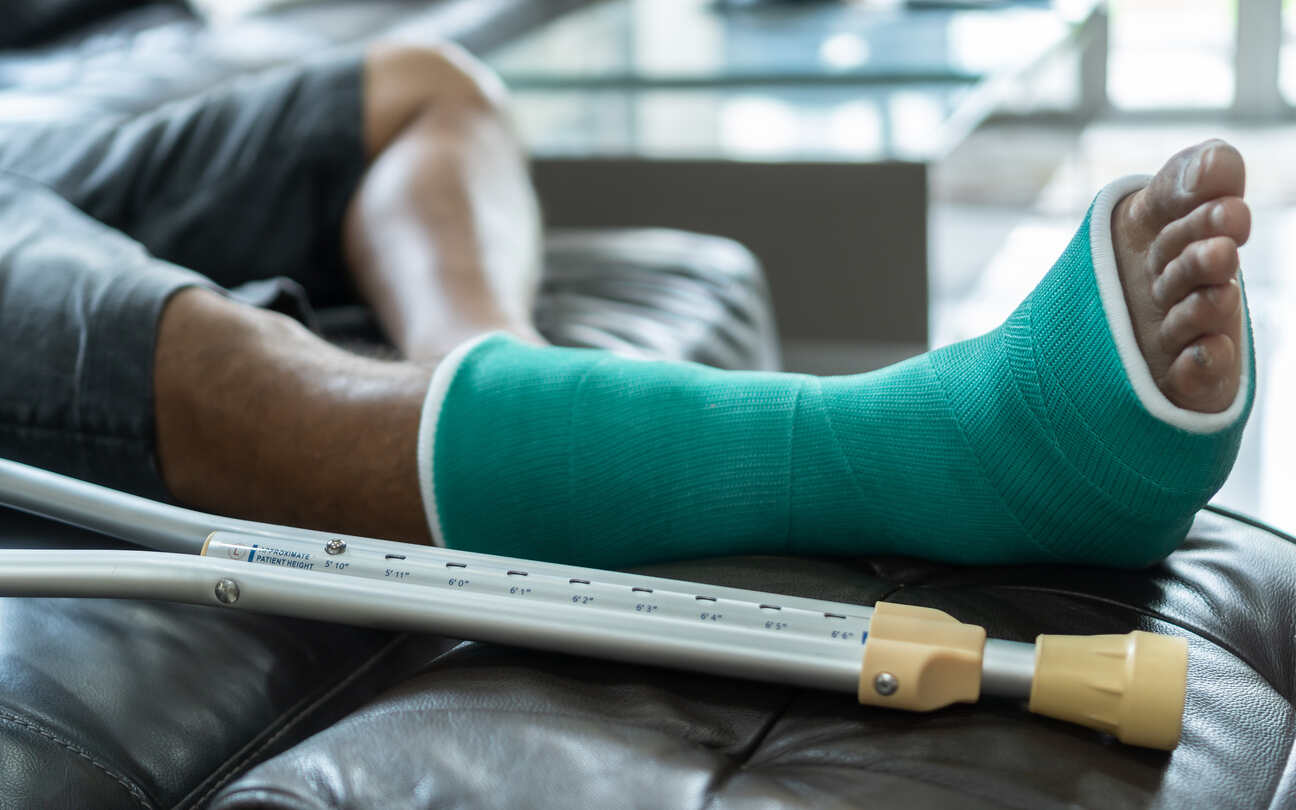
Complicated Fractures in Houston Injury Cases: Why the Type of Break Impacts Compensation
When most people think of broken bones, they picture a simple cast and a few weeks of healing. However, fractures are far more complex in many Houston personal injury cases....
View Post
Recovering After a Crush Injury in a Houston Industrial Accident: Your Rights and Legal Options
Houston is known for its robust industrial sector, with countless workers contributing daily to vital industries such as construction, manufacturing, and energy. However, this bustling industrial environment can pose significant...
View Post
Why Houston Motorcycle Accident Injuries Often Result in Disputed Insurance Claims
Motorcycle riding offers a sense of freedom that many Texas residents enjoy. However, this freedom comes with inherent risks, especially on Houston’s congested roadways, where motorcycle accidents frequently lead to...
View Post